 Caution · irritant sap
Common Hogweed
Heracleum sphondyliumApiaceae family
also: Cow Parsnip · Eltrot
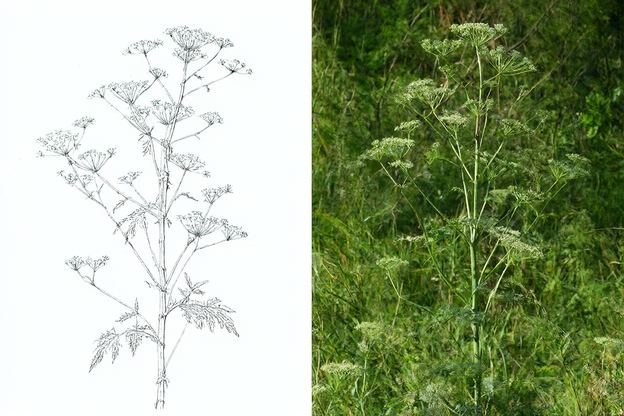
Plate being redrawn — don't use this picture for ID. Common hogweed has broad, lobed, hairy leaves; compare with the description below.
About this plant 01
A tall, robust biennial or perennial herb with large, deeply lobed palmate leaves and flat-topped white flower heads. Common across European farmland and hedgerows. An important insect plant — the flowers attract extraordinary numbers of pollinators and beneficial insects.
Notes for working with it 02
Do NOT confuse with Giant Hogweed (H. mantegazzianum), which causes severe chemical burns. Sap can cause mild photosensitivity — wear gloves and keep away from paths.
Where you'll find it chilling 03
Ways to use it 04
Edible young shoots
Young shoots and leaf stems cooked as vegetable, historically eaten across Europe. Peel and boil or sauté. Only harvest young growth in spring.
Pollinator magnet
Flowers attract hoverflies, beetles, bees and wasps in extraordinary numbers. One of the best farm plants for beneficial insect diversity.
Seed spice
Seeds have been used as a spice substitute — aromatic, slightly anise-like. Dry and grind for use in cooking.
Specimen label 05
Next in the guide 06
 No. 007 of 009
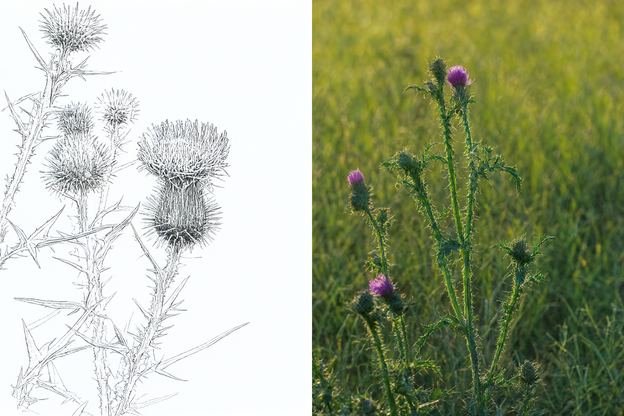
Spear Thistle
Cirsium vulgare
Read it
No. 007 of 009
Spear Thistle
Cirsium vulgare
Read it