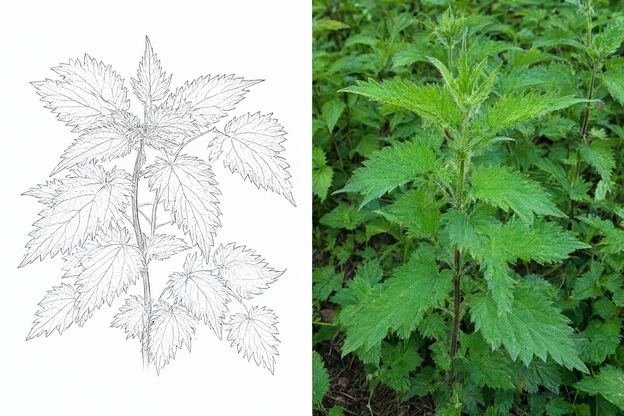
 Edible · wear gloves
Stinging Nettle
Urtica dioicaUrticaceae family
also: Common Nettle · Burn Weed
About this plant 01
A perennial herb found across temperate regions, nettles thrive in nitrogen-rich soils near waterways and disturbed ground. The hollow stinging hairs inject formic acid on contact — but brief cooking or drying neutralises them completely.
Young spring shoots are exceptionally high in iron, calcium, vitamins A and C, and protein — often compared to spinach in nutritional value.
Notes for working with it 02
Always wear gloves when harvesting. Harvest only the top 4–6 leaves in spring before flowering. Not recommended during pregnancy in large medicinal doses.
Where you'll find it chilling 03
Ways to use it 04
Nettle tea
Steep dried leaves in boiling water for 5–10 min. Rich and grassy — add lemon and honey. Known to ease seasonal allergies and support the kidneys.
Wild greens soup
Blanch young tips, blend with potato, onion, garlic and stock. A classic springtime first course — silky, deep green, intensely savoury.
Nettle rennet cheese
Simmer a large bunch in water, strain, then use as plant-based rennet to curdle warm milk. Makes soft, lactic fresh cheese.
Liquid fertiliser
Pack a bucket with nettles, cover with water, steep 2–3 weeks. Dilute 1:10 and feed hungry vegetables — free nitrogen from your hedgerow.
Specimen label 05
Next in the guide 06
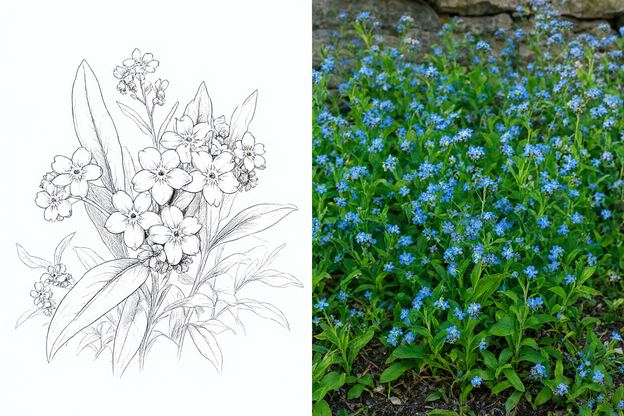 No. 002 of 009
Forget-Me-Not
Myosotis arvensis / sylvatica
Read it
No. 002 of 009
Forget-Me-Not
Myosotis arvensis / sylvatica
Read it