 Medicinal · check ID
Valerian
Valeriana officinalisCaprifoliaceae family
also: Common Valerian · Garden Heliotrope · All-Heal
About this plant 01
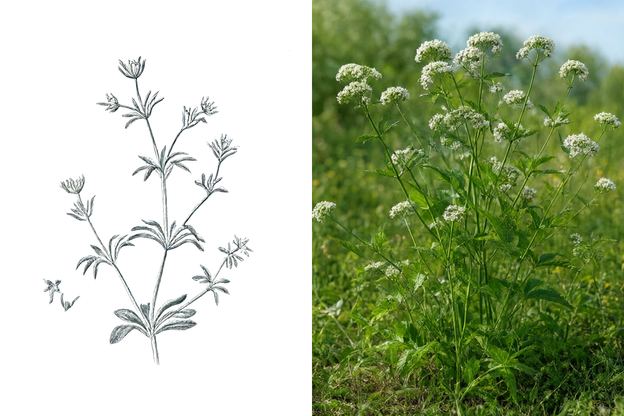
A tall perennial herb growing to 1.5m, with hollow stems, pinnate leaves and flat-topped clusters of tiny pale pink-white flowers. One of the most well-studied herbal sleep remedies. The root has a famously strong, earthy smell — especially when dried.
Notes for working with it 02
Do NOT confuse with Hemlock (Conium maculatum) — Hemlock has purple-spotted stems and is highly toxic. Crush a leaf to confirm the distinctive musky valerian scent.
Where you'll find it chilling 03
Ways to use it 04
Sleep & anxiety tea
Harvest roots in autumn (year 2 preferred), dry, steep as tea. Well-studied sedative for insomnia and anxiety. Blend with chamomile to soften the strong smell.
Root tincture
Chop dried root, steep in vodka 4–6 weeks. Standard dose 1–2ml before bed. Store in dark glass. Shelf-stable for 2+ years.
Pollinator magnet
Flowers attract bees and butterflies prolifically in midsummer. Valuable back-of-border plant with architectural height.
Cat attractant
Roots attract cats similarly to catnip. Be aware when harvesting if farm cats are present.
Specimen label 05
Next in the guide 06
 No. 004 of 009
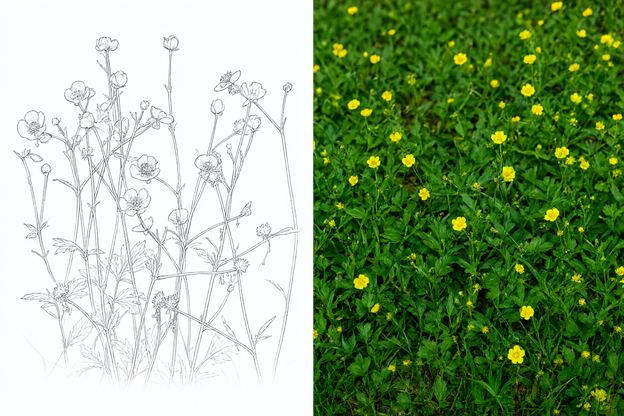
Creeping Buttercup
Ranunculus repens
Read it
No. 004 of 009
Creeping Buttercup
Ranunculus repens
Read it